




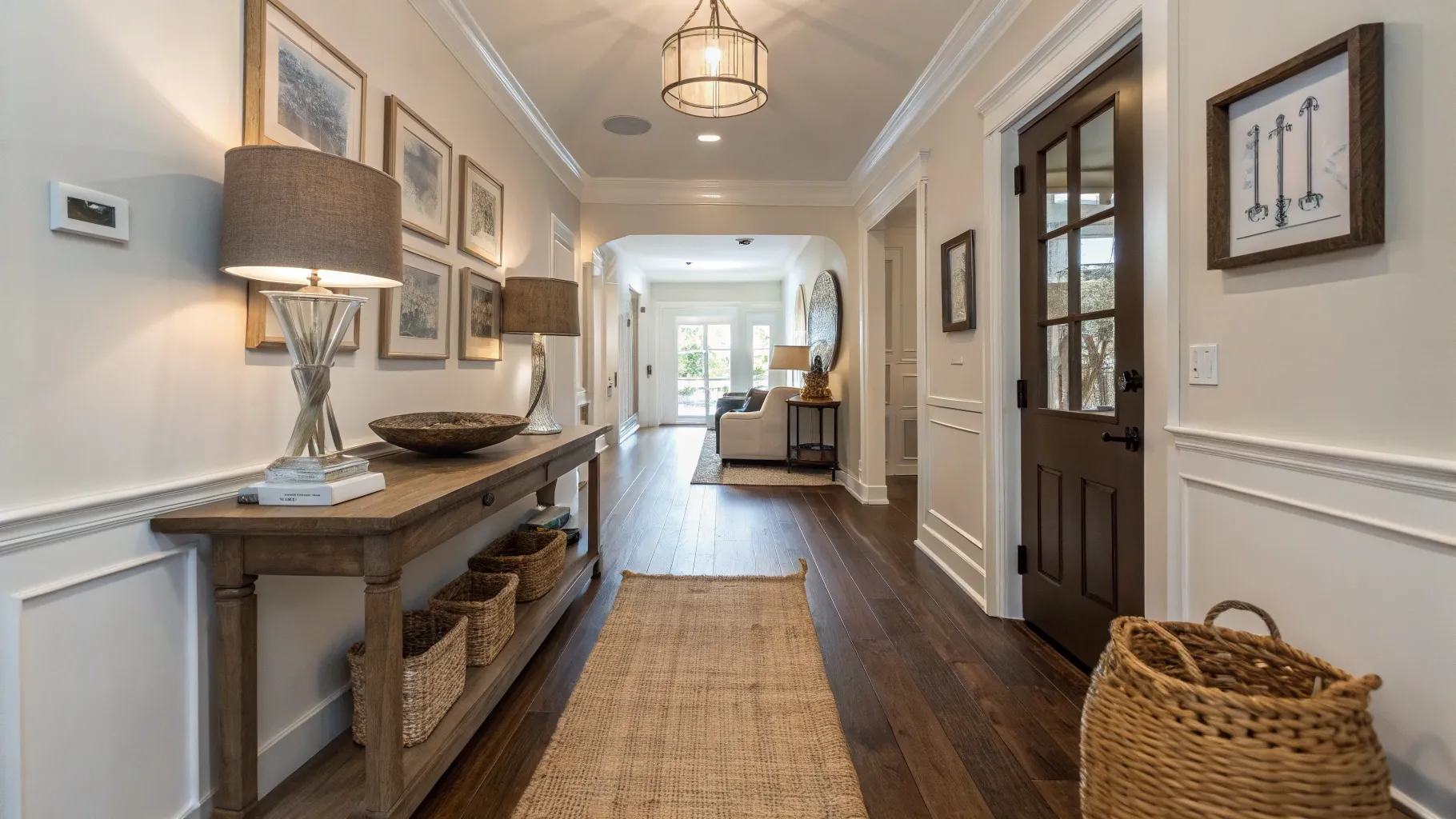
If you’ve ever stood in your entryway thinking, “Why does this feel awkward… and why can’t I fix it?” — this one’s for you.
If you’re trying to Design & Style Long Corridors & Asymmetrical Fireplaces and nothing seems to click, you’re not alone.
Long corridors. An asymmetrical fireplace. Furniture that technically fits but somehow feels wrong. These are the exact layout challenges I see constantly in newer builds — especially in homes designed for modern family rooms where function was prioritized, but flow wasn’t fully thought through.
Recently, I walked a homeowner through two of the most common space dilemmas I solve in client projects: long, narrow corridors and an asymmetrical fireplace that threw off the entire living room layout.
No demolition.
> No custom millwork budget.
> No “start over” energy.
Just strategic design decisions that shift how the space feels.
Below are the exact moves we talked through — the same practical frameworks I use in my client consults — plus a few designer cheats I rely on when I need a space to feel intentional, balanced, and pulled together quickly.
Quick Project Snapshot: What We Were Working With
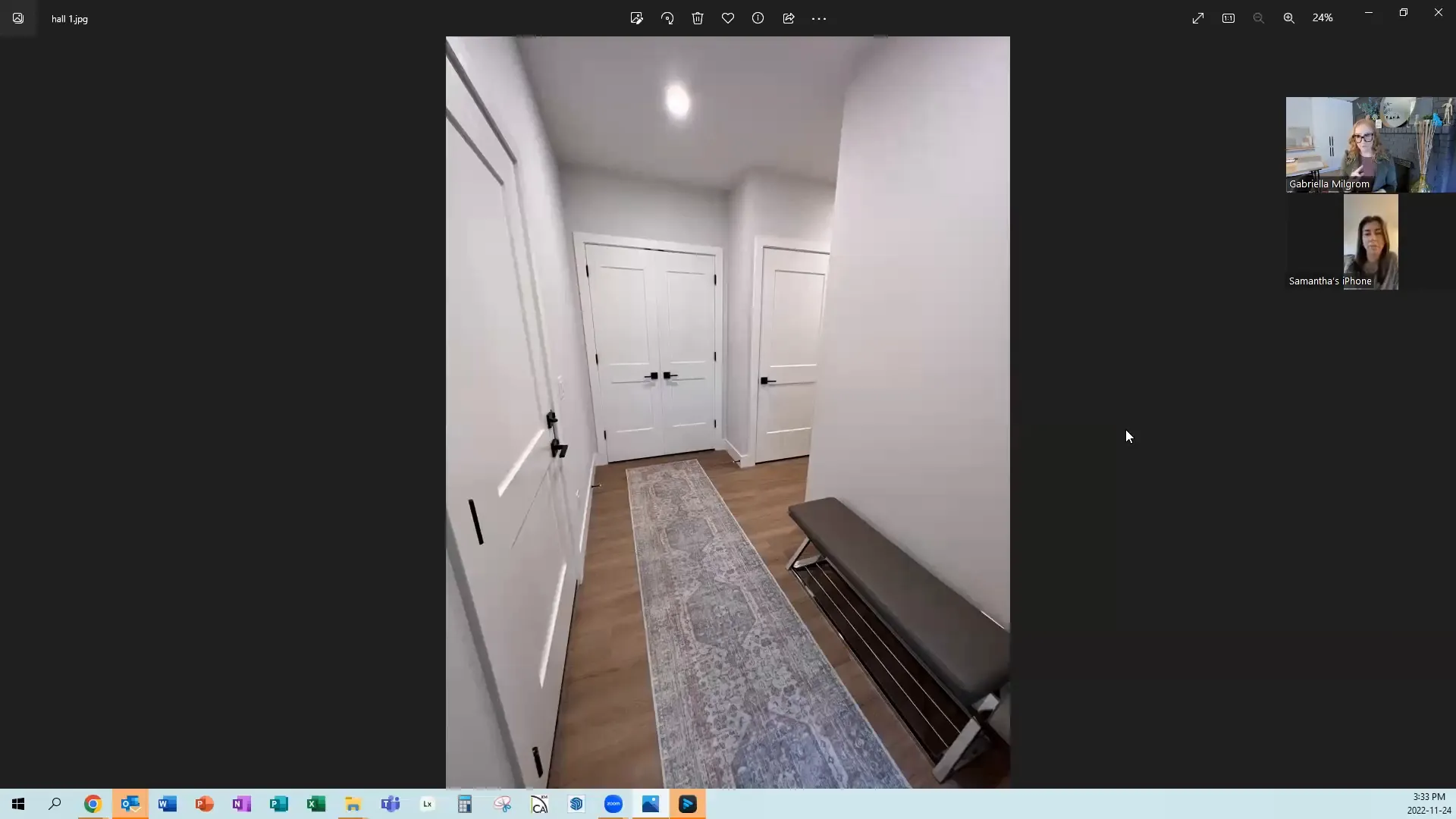
- Fairly new spec build — blank canvas with that classic “why does this feel unfinished?” energy.
- Main entry: family of five comes through the garage daily. Front door is guest-only.
- Current bench = accidental junk-drop zone (zero judgment — happens every time).
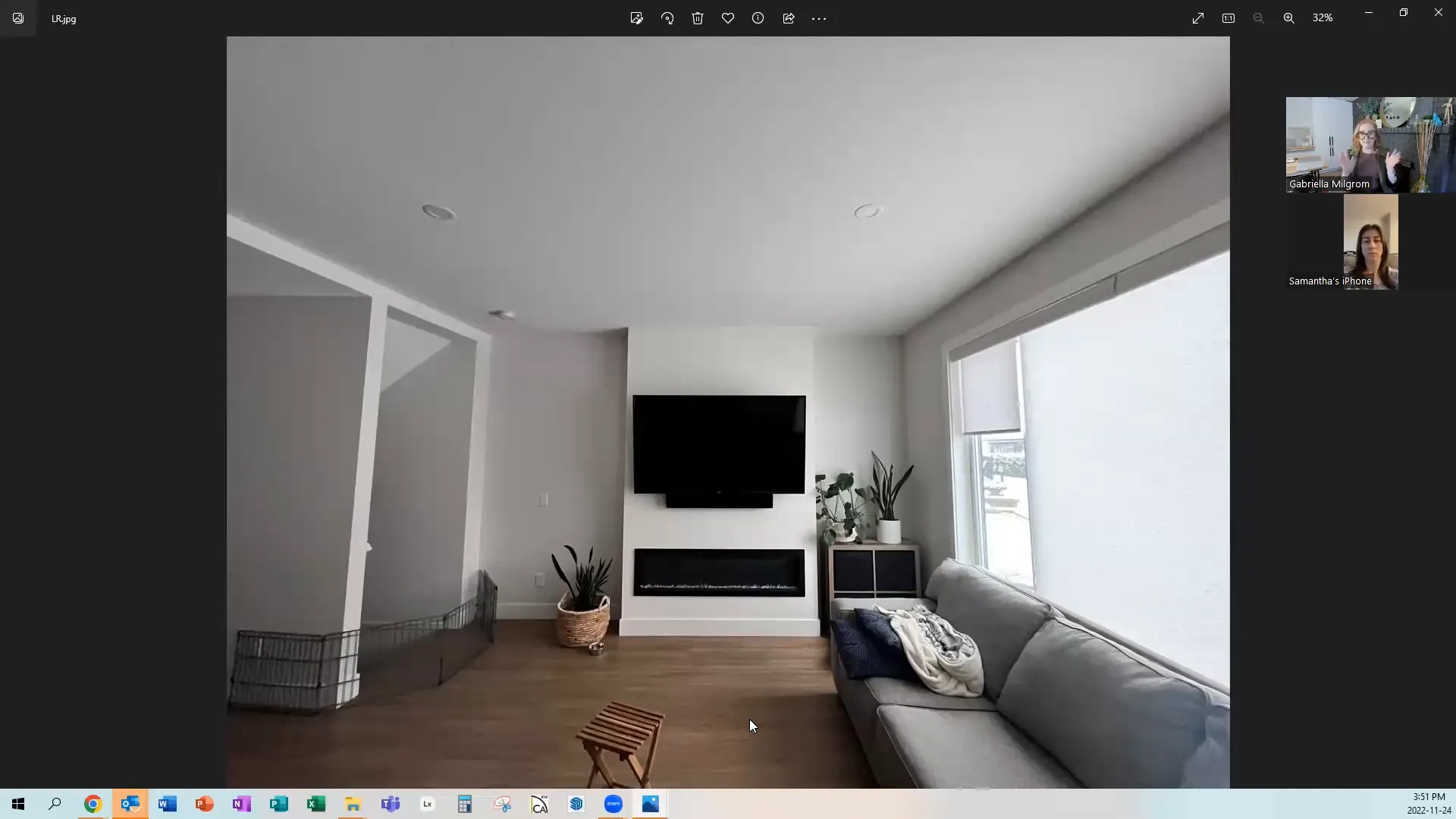
- Living room: asymmetrical fireplace with stairs on one side, heavy low sofa, no rug, no coffee table yet.
- Awkward alcove depth difference that made the eye twitch.
- Style direction: minimal, comfortable, muted tones with blush pink and sage accents, black hardware throughout.
Basically? Good bones. Just needed direction.
Start With Why: What Does “Satisfied” Actually Feel Like?
When someone tells me they want to “feel satisfied” walking into their home, I don’t stop there. I reverse engineer it.
Ask yourself:
- Who actually uses this entry daily?
- What actions need to happen here?
- What do you want guests to feel?
- What colors or textures do you naturally gravitate toward?
When you answer those honestly, design decisions stop feeling random and start feeling obvious.
That’s when a space clicks.
Entry + Docking Station: Stop Letting It Be a Drop Zone
Let’s call it what it is: the bench became a junk magnet.
Instead of fighting that behavior, we designed for it.
If the garage door is your real entry, that’s where daily life storage should live. Hooks. Cubbies. Baskets. Real functionality.
At the front door? That’s guest-facing. That’s where we elevate.
- Replace the random bench with a slim console table.
- Add baskets or pull-out poufs underneath.
- Give keys a bowl so they stop wandering.
- Add a proper rug (10-foot if space allows).
- Leave 1–2 feet between adjacent rugs so it feels composed, not accidental.
This isn’t about perfection. It’s about intention.
Style Clarity Without the Identity Crisis
You don’t need to label your home “modern farmhouse minimal boho transitional Scandinavian.”
Instead:
- Look at your closet.
- Look at the colors you wear.
- Notice the textures you’re drawn to.
In this case? Muted blush. Sage. Soft neutrals. Comfortable. Clean.
So we build the room around that:
- Large pieces stay neutral.
- Accent color shows up in pillows, art, a vase.
- Texture does the heavy lifting — chunky knits, woven baskets, layered rugs.
- Repeat black accents (small, medium, large) so they feel intentional, not random.
Design isn’t magic. It’s pattern recognition.
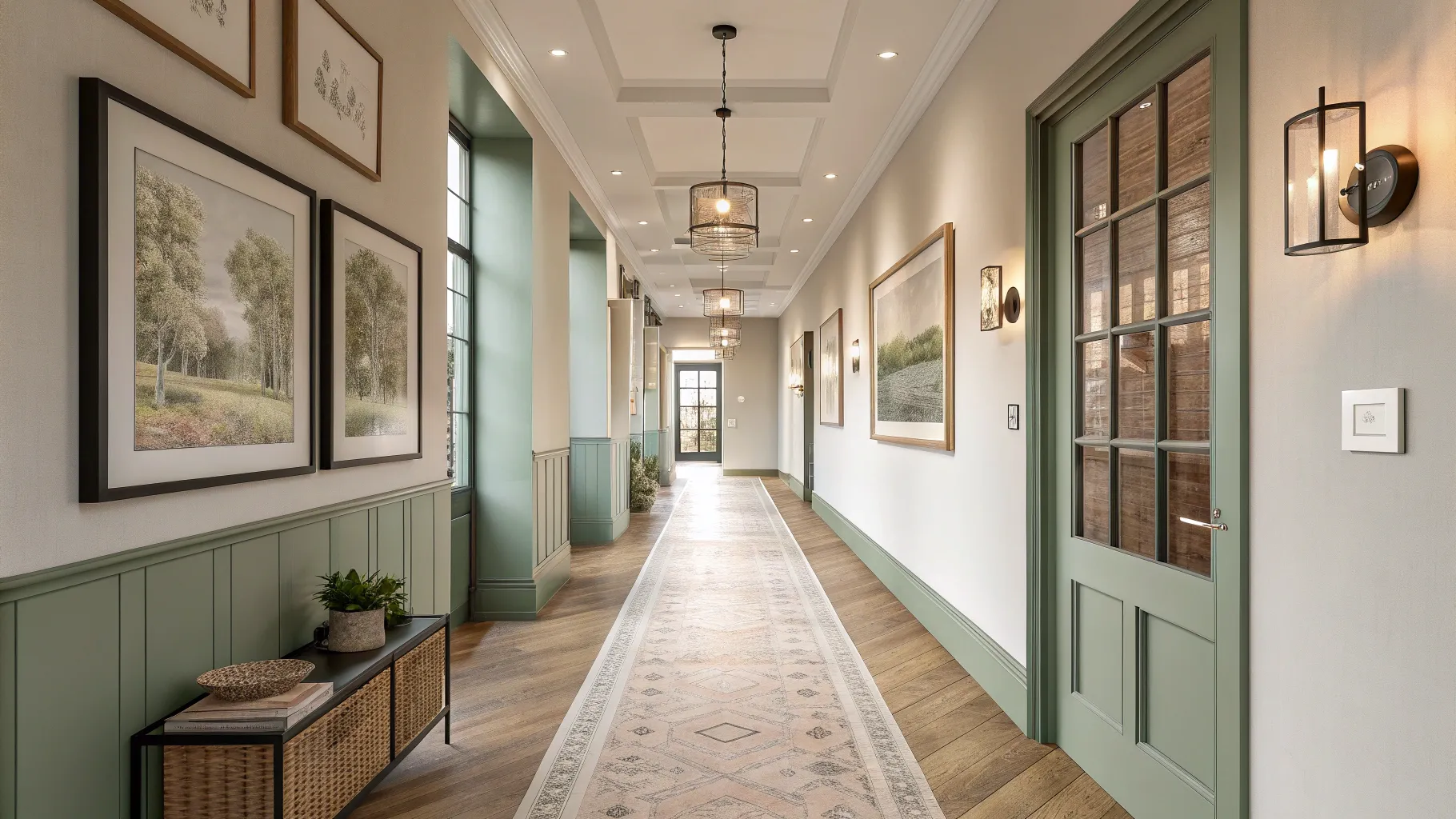
Long Corridor Solutions: Lead the Eye on Purpose
Long corridors are not a flaw. They’re an opportunity.
The goal isn’t to fight the length. It’s to guide it.
Here’s how:
- Use repetition (art, sconces, lighting) to create rhythm.
- Group in odd numbers. Always groupings of 3s win. (I will die on this hill.)
- Convert pot lights to pendants with a kit if rewiring isn’t happening.
- Anchor the end with a large piece of art or a mirror.
- Let rugs breathe — they don’t need to touch every edge.
When you emphasize direction instead of ignoring it, the hallway suddenly feels intentional instead of awkward.
Asymmetrical Fireplaces: Balance the Weight (Without Demolition)
An asymmetrical fireplace throws off visual balance — especially when stairs sit on one side.
The mistake? Trying to ignore it.
Instead, you redistribute the weight.
In this room, the left side (stairs + alcove) felt heavy. The right side felt like it disappeared.
So we beefed up the right side.
What Works
- Add a tall bookcase (IKEA Billy trimmed out looks built-in and costs a fraction).
- Floating shelves layered with plants and decor.
- A base cabinet with shelving above.
- Larger art + taller lamp if you go slimmer with furniture.
- Use triangle compositions so the eye moves.
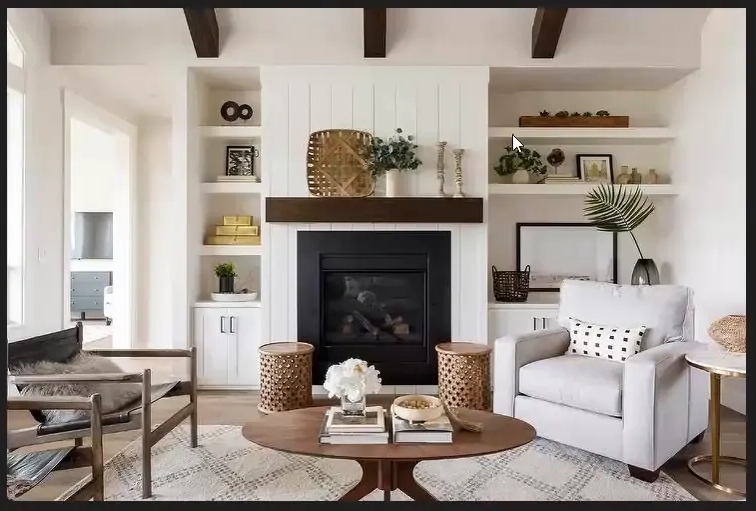
Furniture + Rug Rules for This Living Room Layout
Rug rule: front legs of the sofa go on the rug. Minimum.
Aim for 12–16 inches beyond furniture edges if possible.
Now let’s talk about the coffee table.
You have a heavy, low sofa. So do not add another block of visual weight.
Instead:
- Choose a lighter coffee table up on legs.
- Square or round works best here.
- Around 36” diameter for round (adjust for your sofa depth).
- Let air move under the coffee table.
A chunky coffee table competing with a chunky sofa suffocates the space.
A lighter coffee table gives breathing room.
And yes — measure inside arm-to-arm before buying a coffee table. Please.
Cohesion Tricks I Use on Repeat
- Layer texture instead of color.
- Repeat black accents intentionally.
- Use odd-number groupings.
- Add a plant when stuck.
- Edit. Then edit again.
The client said: “I just want to walk in and feel at home.”
That happens when function is solved first. Then comfort. Then styling.
In that order.
Quick Shopping & Execution Cheats
- IKEA Billy units for affordable height.
- Pot-light conversion kits if rewiring isn’t happening.
- Long runners from budget-friendly retailers.
- Measure everything. Twice.
Want the exact measurement rules I use on client projects?
I put together a free Designer’s Measurement Guide that walks you through sofa-to-coffee-table spacing, rug sizing rules, art placement heights, and the “designer math” that makes a room feel finished instead of frustrating.
It’s the shortcut to getting your furniture and accessories working together so your space looks intentional — like it was designed by a pro (because now… it kind of is).
Final Pep Talk
Awkward spaces are not design failures. They’re just unresolved decisions.
With thoughtful lighting, intentional storage, balanced weight around your asymmetrical fireplace, and the right coffee table choice anchoring the seating area, your long corridor and fireplace wall can go from “why does this bug me?” to a living room layout that feels effortless.
Yes — even in homes designed for modern family rooms.
And yes — without knocking anything down.
If this post helped, the YouTube walkthrough will take it a step further.
In the video, I break down the asymmetrical fireplace wall, corridor lighting rhythm, and living room layout decisions on screen — the same way I do inside client consults.
It’s practical. Visual. And easier to grasp when you see the proportions in action.
Watch the full consult replay here →
Still need more hands-on help?
Explore our virtual design packages for tailored guidance specific to your space and your style — all at an approachable investment.


Read the Comments +